When In Rome
I first visited Rome when I was 19. It was my first time travelling abroad alone. The three impressions that stayed with me since were: the magnificence of the Vatican City; The disappointment I felt on not being able to buy any of the exquisite leather shoes I saw as they didn’t make them in my size; And the kindness of a stranger that came to the Termini train station to pick me up and help me find accommodation. She was the sister of another kind stranger I had met at the train station in Verona two days prior when I was wandering around trying to find someone that could speak English. Even though I had been back to Italy since that trip, I hadn’t returned to Rome until last month. This time round I was more organised. I had booked accommodation, bought tickets to Vatican City and even reserved a couple of restaurants recommended by friends.
Every time I shared that I was going to visit Rome I was told that I was lucky, that the food was the best. How they wished they could go back to Rome too just to eat the delicious food. As a result I arrived in Rome with high expectations of the cuisine. When I stepped into the neighborhood supermarket near my hotel it seemed like my expectations were going to be met. From the outside the supermarket looked pretty basic and unattractive but once inside I was surprised by the quality and variety of its produce. Instead of just getting the bottled water I went there for, I wanted to fill up my basket with vibrant veggies, the creamiest mozzarella di bufala and all the different types of focaccia I didn’t know existed. I resisted as I was staying in a hotel so nowhere to cook. I comforted myself with the restaurant visits to come. By day four I was over the food. Pasta, pizza, bread, pomodoro sauce and parmesan cheese on everything. To be fair these are things I normally don’t eat nor like but as the saying goes “when in Rome, do as the Romans do”. This isn’t to say that I didn’t have good food in Rome. I did. I still think about the simple, perfectly cooked green beans and asparagus that I had at one of the restaurants I visited. I didn’t know that those two vegetables could ever taste that good without any embellishment. I had good pasta too but I wouldn’t go out of my way to eat it again.
Other than going to the Vatican City and the botanical garden I had no place I wanted to go in particular. My plan was to wander around and see what caught my eye. The first thing I noticed walking from the Termini station to the hotel was the entrance doors to apartment buildings. The doors were made out of wood and metal like the doors I’ve seen elsewhere, but the designs of ones I saw in Rome were more grandiose, and beautiful. The entire time I was in Rome, I kept noticing and pointing out entrance doors to my traveling companion. I was curious about what was behind those doors. Occasionally a door would be open and I’d wander through to discover a courtyard, or a garden. Before I could explore further I would be stopped by a guard telling me sternly that it was private property. Once, a guard was kind enough to let us look around the ground floor and gave us a brief history of the building. Another thing about the buildings that got my attention were their roof terraces. I was surprised to see an abundance of greenery adorning the roofs of so many buildings of different sizes and uses. Even hotels had garden roof terraces. It was pleasant to see. Just as it was pleasing to get a whiff of jasmine that decorated the facades of buildings as I walked by. During my time there I took refuge under the many Mediterranean pine trees that lined the streets, their fluffy heads offering a welcome respite from the sun and even the rain.
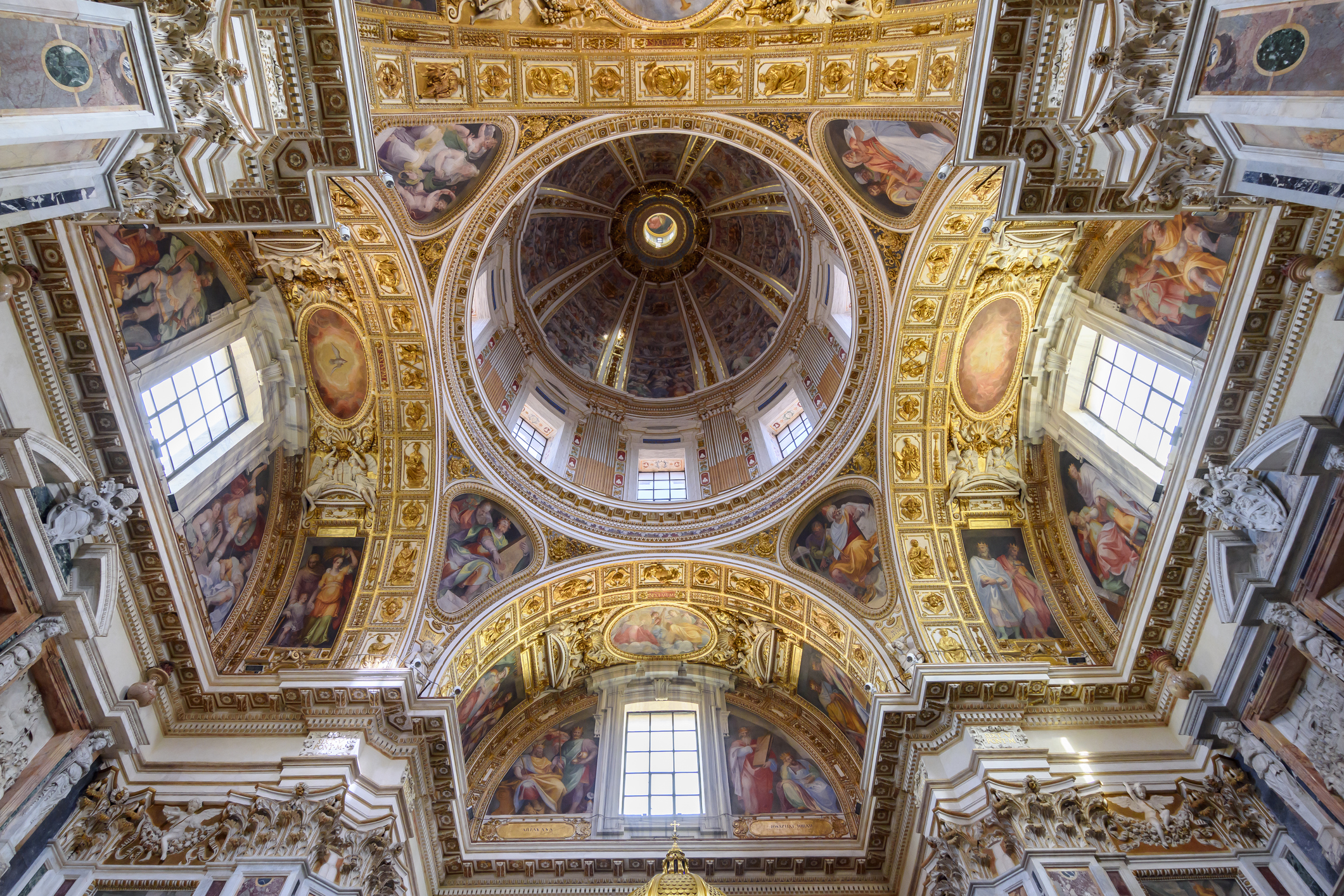
My favourite discovery outside the doors and greenery of Rome is ceilings. Not any old ceilings, I’m talking about the mega ones found in basilicas, especially the ones with Santa Maria in their name. On the second day of walking past a church that attracted a small crowd, out of curiosity I decided to go in. As soon as I stepped into the Basilica di Santa Maria Maggiore my eyes went to the ceiling and I let out a “wow”. It was the most beautiful ceiling I’ve ever seen. I spent so long looking up at the mosaics that my neck was starting to hurt. Then I looked at the floor, another great work of art. Honestly, no words I use will do it justice. I’m only sharing one picture of part of the ceiling (see main picture) because all photos I’ve seen fall short of capturing the impressiveness of this basilica. Perhaps the best thing I can say is that every inch of the basilica showed the hand of God. I discovered by reading the visitor’s information that this is a very important basilica where many popes have been buried, including Pope Francis. I later saw his tomb. Next, I stumbled into the Basilica of Santa Maria in Trastevere, another spectacular church that dates back to the 12th century. I sat through afternoon mass so I could take in the mosaic in the apse. Sitting there I felt as if the Virgin Mary and Jesus Christ in the mosaic were watching over me. I arrived exhausted after a day of walking around but I left the basilica after the mass reinvigorated.
From the first time (and every time after) I set eyes on the Vittoriano I laughed in awe of just how monumental the building is. This is definitely the biggest building I’ve ever seen made out of marble, and in all white. I had no idea what exactly it was but I loved it. I later found out that it was built to commemorate the unification of Italy and as a symbol of national patriotism. I thought it totally made sense that this building should be the national symbol. I’ve always thought that when it comes to design, nobody does ostentatious with such finesse as the Italians. Everything about this building was extravagant but I took pleasure in every inch of it that my eyes could take in. I made a point of walking past it every opportunity I got.
On one occasion, admiring the Vittoriano from across the road, I spotted a building right next to it, made of small brown bricks. The only reason I noticed it was because I saw a handful of tourists stop in front of the stairs to consider whether to climb up the really long steep steps or not. Some did and slugged their way up. This building is simple without any signs of embellishment except the cross above the entrance to indicate it is a church. As always, curiosity got the better of me, I wanted to find out what was up there. When I got to the stairs there were a couple of American tourists contemplating if and how to get up the stairs. One of them, who clearly knew what the building was, informed me that there were 124 steps to get to the top. Not one to be easily deterred I took a deep breath and panted my way up. When I got to the top, I wondered why anyone would climb up all the way to attend a church. You’d have to be pretty devout to do this on a regular basis. I only did it because I was on holiday and I had time on my hands. As soon as I walked into the Basilica di Santa Maria in Aracoeli, I saw that there was nothing modest about it. Seeing the splendour of the mosaics on the wooden ceiling, apses, the altar, the statutes, relics, tombs and the Cosmatesque flooring made me understand why anyone would climb up all those stairs to worship here. I imagined it would make you feel closer to heaven. I found out when I was writing this piece that Ara Coeli means altar in heaven. I walked around admiring the basilica with a bit of dread at the back of my mind of having to go back down the stairs. As if the Virgin Mary read my mind and guided me to a narrow corridor through one of the arches, at the end I spotted a door and walked through.. I recognized immediately where it led me as I had walked past it the previous day, it was an exit connected to the Palazzo Senatorio and Capitoline Hill. And it only had four steps to go down! I thanked the Virgin Mary for showing me this “secret” exit. I went back into the basilica, free to fully rejoice in this beautiful home of Santa Maria.
The first time I went to the Vatican City I simply showed up, bought my ticket and roamed around. For my second visit I wanted to make more of my time there so I booked two guided tours, one of its garden and the other of the museum. Also I was hoping to be shown some of the scenes from the movie Conclave. Imagine my disappointment when the guide informed me that the movie wasn’t filmed there, but in a film studio. Additionally, I thought I might bump into the Pope or one of his cardinals in the garden. I didn’t! Nevertheless, I enjoyed being guided around the beautiful and serene garden, and made do with imagining the Pope walking around the garden when all the tourists were gone. Even though the museum tour guide was highly knowledgeable (an Egyptologist. Apparently, the role of a tour guide in the Vatican City is much coveted and attracts the highly qualified) it was hard to enjoy the tour. The museum was packed! The security guards often had to instruct visitors to move along. I overheard one of the tour guides say that at the height of the season they can have up to 24 000 visitors a day. Which explains why when I arrived, the line to buy tickets went all the way to Athens. I patted myself on the back for having had the foresight to buy my ticket in advance. By the time we trailed our way to the Sistine Chapel, there was no space for me to stand or sit to enjoy probably the greatest ceiling of all ceilings. The ceiling was painted by Michaelangelo and considered to be his best known work. I wanted to stand there and imagine cardinals electing a new pope while I take in Michaelangelo’s masterpiece. Instead, I kept having to watch out for visitors brushing past me. I gave up after a few short minutes and walked out. I left Vatican City thinking that was what progress looked like. In the 30 years since I was first there, flying has become so much cheaper and more accessible that many more of us can visit a place like Vatican City, crowd it out and make it unenjoyable. Still I reminded myself that it is a privilege to have been able to see it twice in my lifetime because the Vatican City is a testament to what faith can create.
Spreading Light
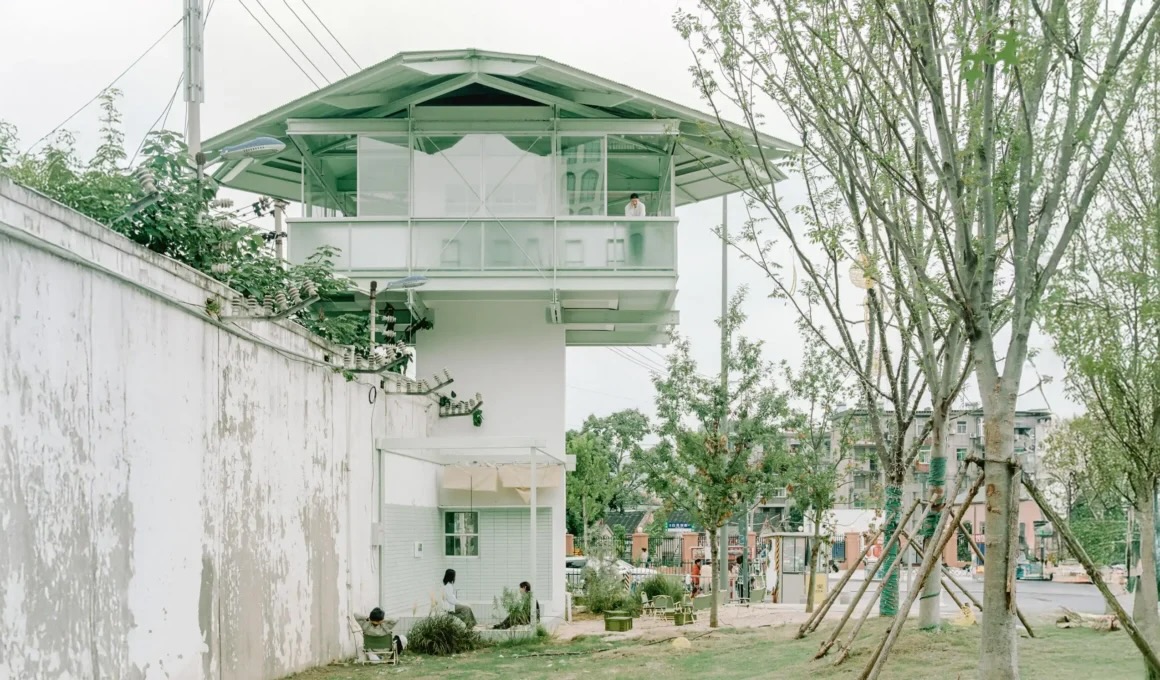
In Hefei, China, SZ-Architects transformed a former prison guard tower into a very small 24-hour Bookstore—a 70 m² reading room that stays open and unguarded for the neighborhood. I was moved by how the architects had the idea to turn a place that was once associated with darkness into a place that holds nothing but daylight and books donated, free and open to all. May this idea spread!