Fast, Faster, Fastest
“Speed is the hope of the West.” Paul Virilio
Why is it taking so long? Can it go faster?
Why is this… so slow?
How long does it take to…?
How fast can it be done?
These are things I hear myself saying frequently. This is because I feel that I could be faster, that things could go faster. I wonder why this preoccupation with being faster? It could be because I live in a society where fast, faster and fastest is a highly valued and desirable commodity. Fast food. Fast fashion. Fast check-in/out. Fast lane. Fast delivery. I’ve often wondered if my concept of how long things should take may be a bit off. This might explain why I’m often running late in spite of my best efforts. When I saw that Vaclav Smil had written a whole book about Speed, I thought he might provide some insight into my own and society’s preoccupation with wanting everything to happen fast.
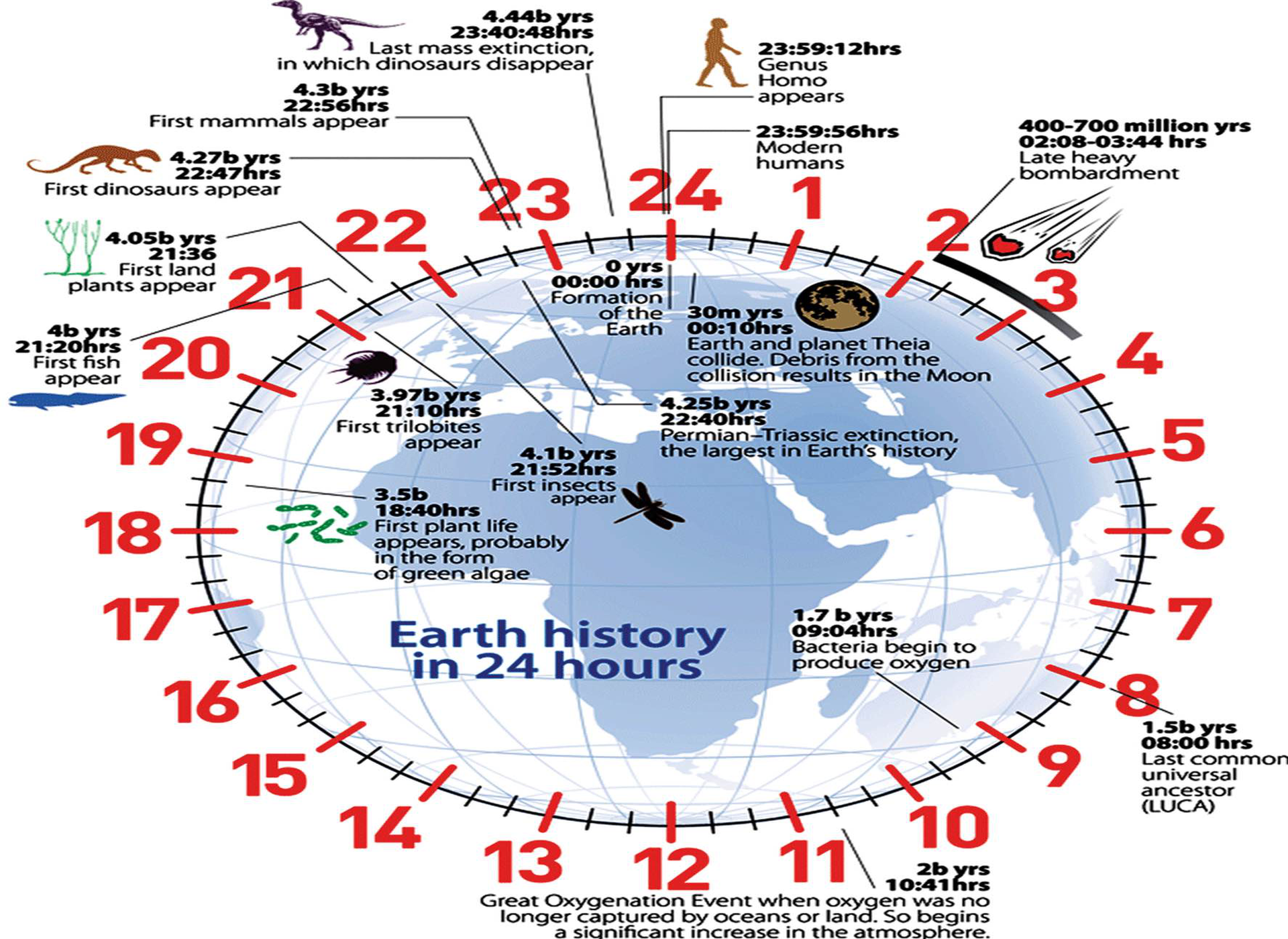
Before I started reading Speed, the foremost question I had was why are we obsessed with speed. Vaclav Smil didn’t directly address this question but the answer I deduced was that it has to do with at the stage we humans emerged during the evolution of planet Earth. It is said that Earth emerged 4.5 billion years ago, but the emergence of hominins, a group comprising our ancestors started just 6 million years ago, after the Earth had undergone many transformations.
“Looking at this long record of the planet and evolution of life, we must note the repeated periods of (comparatively) rapid fundamental advances followed by lengthy periods of slow progress, stagnation, or even retrogression (including five major extinction periods). The formation of the planet took most likely less than 100 million years, the Great Oxidation Event no more than 10 million years, the Cambrian explosion only about 20 million years, and the separation of hominins from other great apes and the evolution of Homo sapiens less than 15 million years. If these spans of repeated rapid advances are correct, then they took, respectively, just tiny fractions of the entire length of evolutionary history. If we start counting at 4.5 billion years ago, then the Earth’s formation lasted only about 2 percent, the Great Oxidation Event only about 0.2 percent, the Cambrian explosion less than 0.5 percent, and the rise of our species less than 0.3 percent of that long time span. (Smil, Vaclav. Speed: How it Explains the World (pp. 37-38)).”
Thus, in the great scheme of things, human evolution has unfolded at a very quick speed. If we also take into account the accelerated technological and economic advancements of the 19th and 20th centuries, it is no wonder that we, modern humans, hold speed in such high esteem. Though I say modern humans, according to Smil there is nothing modern about our lust for speed. Our interest in it “as a remarkable, even magical, and desirable property is ancient”. (Smil, Vaclav. Speed: How it Explains the World (p. xiii)). And the earliest documented example of our desire can be found in the Bible’s story of King Solomon’s flying carpet. It is said that King Solomon, thanks to his power to control the wind, could travel in a day the distance that would normally take a month while sitting on his silk carpet.
What is speed?
Whilst I assume everyone knows what speed is, I think it is worth clarifying my own understanding. As Smil pointed out, speed can be a measure of many things outside velocity. “Speed, a time-limited rate, must always have time as its denominator, but we have been using the noun to describe many phenomena that do not have length (distance) in the numerator… But a far larger category involves the change of aggregate numbers (N) measuring the growth of countless natural and man-made phenomena: this could be called, collectively, N/T speed. (Smil, Vaclav. Speed: How it Explains the World (pp. 13)).”
The era of accelerated speed
Prior to 1850 the speed of human progress was very slow and at times stagnant. The average world annual economic growth rate in the first millennium of the common era was 0.01%. Similar figures can be seen in the second millennium with some periods of stagnation for countries such as Spain and Italy, while China grew at 0.1% (Smil, Vaclav. Speed: How it Explains the World (pp. 156)). Technologically, human and animal labour were the main tools. Looking at production, for example, “English wheat yield in 1600 differed little from harvests in 1200—or from American and French yields in 1820!” (Smil, Vaclav. Speed: How it Explains the World (pp. 157)). Large construction projects relied on building methods that didn’t change for centuries, for example, ox-drawn wagons to carry stones, wooden cranes powered by men walking or harnessed by animals used to lift stones, bricks laid using hods and trowels. As a result constructing sizable buildings such as cathedrals took centuries. For example, York Minster took 252 years, the Duomo di Milano, 579 years and Cologne Cathedral, 632 years (Smil, Vaclav. Speed: How it Explains the World (pp. 158)).
I remember learning in history class in school that the world, particularly the West, started experiencing fast economic and technical growth from the 19th century thanks to the industrial revolution. This was when droves of farmers moved from the land to work in factories with machines powered by steam engines. It appears this was not the case. Steam engines were rapidly adopted only by some industries (textile mills, sawmills, ironmaking) and the British economy remained largely traditional until 1850; and hence, as historian Albert Musson put it, “the typical British worker in the mid-nineteenth century was not a machine-operator in a factory but still a traditional craftsman or labourer or domestic servant.” Similarly, US data show that in 1850 Massachusetts had 1,268 enterprises powered by water and just 73 powered by steam (a mere 6 percent of the total), and according to labor economist Carroll Daugherty’s detailed reconstruction of all installed US power, in 1869 steam engines accounted for about 33 percent of the total, water- and windmills for about 8 percent, and draft animals for 59 percent!” (Smil, Vaclav. Speed: How it Explains the World (pp. 167)).
What then brought on the accelerated speed of change from the late 19th century? Vaclav Smil put the cause down to three innovations of the 1880s—steam turbines, combustion engines powered by liquid fuels, and electric motors (Smil, Vaclav. Speed: How it Explains the World (pp. 170)). What they had in common was their ability to produce fast and powerful rotational kinetic energy that transformed many industries.
Steam turbines when first invented by Charles Parson in 1884, his first prototype had a power of just 7.5 kilowatts (equivalent to about 10 horses) but it ran at a dizzying speed of 18,000 rpm, with blade top velocities reaching 76 m/s—too fast for any useful contemporary applications. By 1891, Parsons’s first 100-kilowatt turbine, produced electricity by rotating the generator at 4,800 rpm. During the 20th century, the highest capacities of steam turbines rose by four orders of magnitude (to more than 1 gigawatt), and the largest machines now operate at 3,000 rpm (Smil, Vaclav. Speed: How it Explains the World (pp. 169)).
Carriages built by Carl Benz, Wilhelm Maybach, and Gottlieb Daimler in 1886 were the first vehicles to be powered by combustion engines. The use of these engines accelerated after 1900 (Ford’s Model T was released in 1908), and by 1919 their accumulated capacity dominated America’s installed power: they accounted for 62 percent of the total, compared to 29 percent for steam turbines and engines (Smil, Vaclav. Speed: How it Explains the World (pp. 170)). A version of combustion engine fuelled by heavier liquid fuel operating with a much higher compression ratio and without sparking was created in the early 1900s by Rudolf Diesel, and was first used commercially in shipping before the First World War. Since the 1950s this version has dominated all forms of heavy shipping (from oil tankers to container vessels), heavy road and off-road machines, and in some countries it also became a favorite for cars (Smil, Vaclav. Speed: How it Explains the World (pp. 170)).
Electric motors were first used commercially in 1882. However their mass scale adoption started after George Westinghouse bought Nikola Tesla’s patent for a two-phase alternating current motor in 1888. Thanks to their versatility and high efficiency (at least 65 percent, and up to 95 percent) of converting electricity into rotary motion, electric motors can be found running everything from high-speed trains to elevators to refrigerators and food processors (Smil, Vaclav. Speed: How it Explains the World (pp. 171)).
There is another group of rotatory machines that has also had a huge impact on our ability to enjoy accelerated speed but it is little known outside the world of builders, engineers, and designers. He is talking about lathes. Until I read this I had never actually thought about lathes. According to Vaclav Smil though lathes have been used since antiquity to produce objects ranging from parts of furniture (chair legs) to spinning wheels, and from cups and bowls to sieves and pulleys. However, in the past 150 years they have undergone an impressive upgrade. “Today’s computer-controlled lathes produce, with astonishing precision, countless parts for other lathes and metal-working, electrical, combustion, and industrial machines from aircraft to tankers (Smil, Vaclav. Speed: How it Explains the World (pp. 173)).”
Reflecting on how long it took to create the Earth and turn it into the place we now live, I’ve asked myself if society’s preoccupation, and mine, with fast, faster, fastest isn’t puerile and untenable. Why do I need to read a book faster than I already do? Because I have so many more books to read, I tell myself. What’s the point of reading faster if I’m not going to retain much? I’ve tried speed reading techniques and they were unproductive. What’s the point of having a car that can travel at 174 mph if you live in a city that is densely populated? For example, the maximum speed limit in London is generally 20 mph (32 km/h) on most roads regardless of how fast your car can travel. The limit was put in place to improve road safety. We could fly from New York to London in 3 hours with the Concorde cruising at speed of 1,350 mph (2,160 km/h, Mach 2), but it wasn’t economically viable and also had safety concerns. Instead we fly with conventional subsonic airliners cruising at speeds around 550 to 600 mph (885 to 965 km/h) that take 7 to 8 hours, a safer and more profitable option. Regular consumption of fast food will make you fat and unhealthy; Fast fashion fast ends up in landfills. Yep, fast, faster, faster like all human desires and developments always have their downsides. It seems that I needn’t worry about our obsession with speed because as Canadian economist Bernard Beaudreau concluded that: “Metaphorically speaking, speed was the goose that laid the golden eggs over the past two centuries, producing an unparalleled increase in material wealth … However, like any goose—even those that lay golden eggs—its period of egg-laying came to an end in the late 1960s/early 1970s.(Smil, Vaclav. Speed: How it Explains the World (pp. 212))”
Nevertheless, I think we shall be fine with the levels of speed we have achieved thus far. As Vaclav Smil summed up:
“In order to revolutionize transportation (with internal combustion engines on land, on water, and in the air), vastly increase industrial production (with electric motors doing everything from heavy lifting to precision drilling and metal machining), and meet the rapidly rising demand for electricity, we have not needed (some exceptions aside) faster-rotating diesel engines than those developed before 1900, faster-rotating steam turbines than the first pre-1900 commercial designs, faster-rotating motors than those conceived during the 1880s, or faster-rotating gas turbines than those conceived during the 1930s (Smil, Vaclav. Speed: How it Explains the World (pp. 245-246)).”
Factfulness: eat local vs. food choice
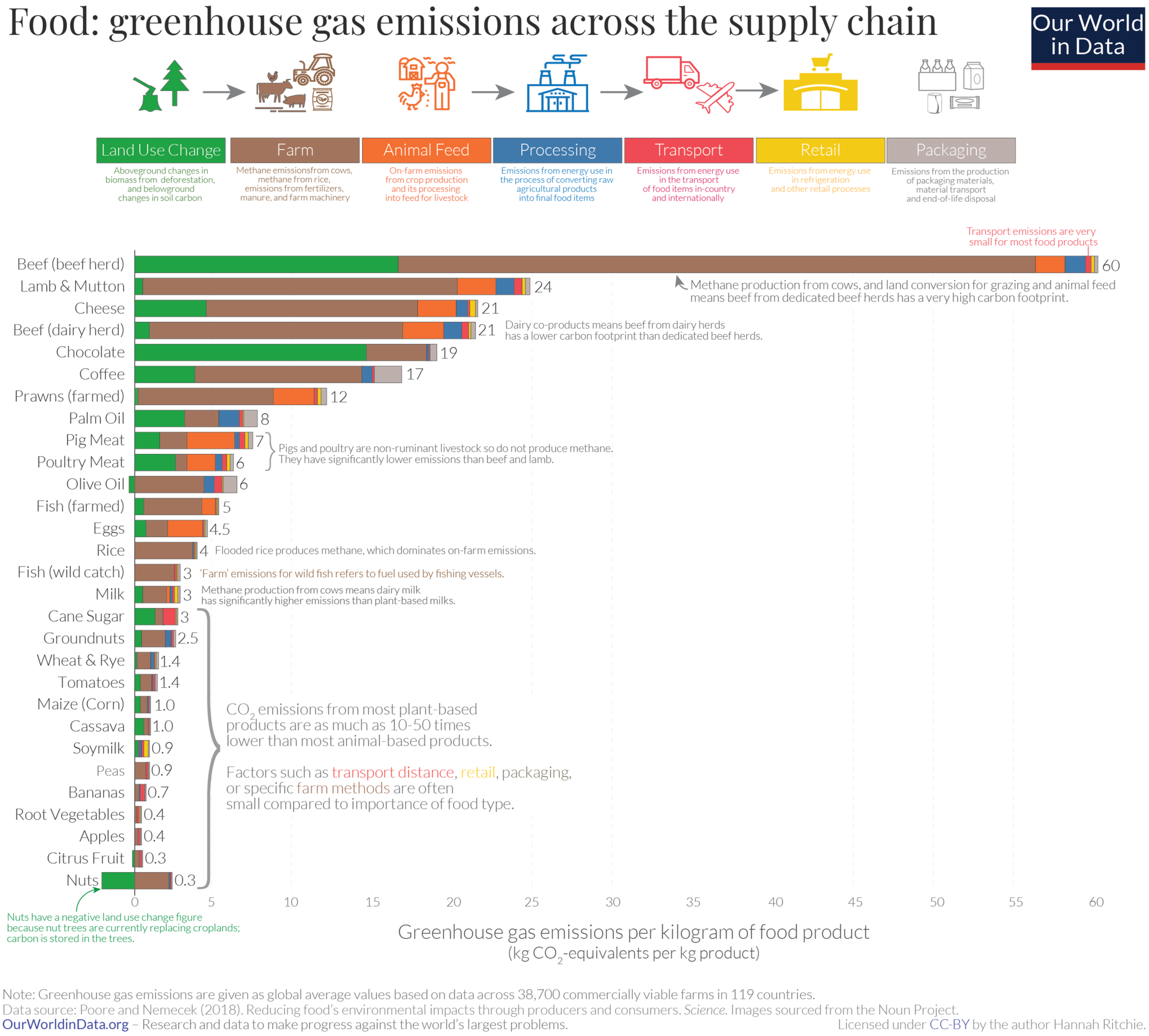
Since I read on ourworldindata.org that “eat local” isn’t necessarily the best for the environment I’ve been joyfully filling up my shopping basket with my favourite flown-in tropical fruits and vegetables, guilt free.